The low FODMAP diet can feel overwhelming when you first start. Suddenly you’re checking ingredients, thinking about serving sizes, changing favourite meals and trying to work out what on earth you can eat.
I know that feeling well. I’ve lived with IBS and coeliac disease for many years, and over time I’ve found lots of small strategies that make eating a low FODMAP diet feel easier and more enjoyable.
The first phase of the low FODMAP diet is only designed to be temporary, but that doesn’t mean you need to spend those weeks feeling stressed about every meal.
Here are nine strategies I use to take some of the work out of low FODMAP eating.
1. Find a Breakfast You Can Eat on Repeat
You don’t need to reinvent breakfast every morning.
Having one or two easy breakfasts that you enjoy can remove a decision from the start of your day and make grocery shopping simpler too.
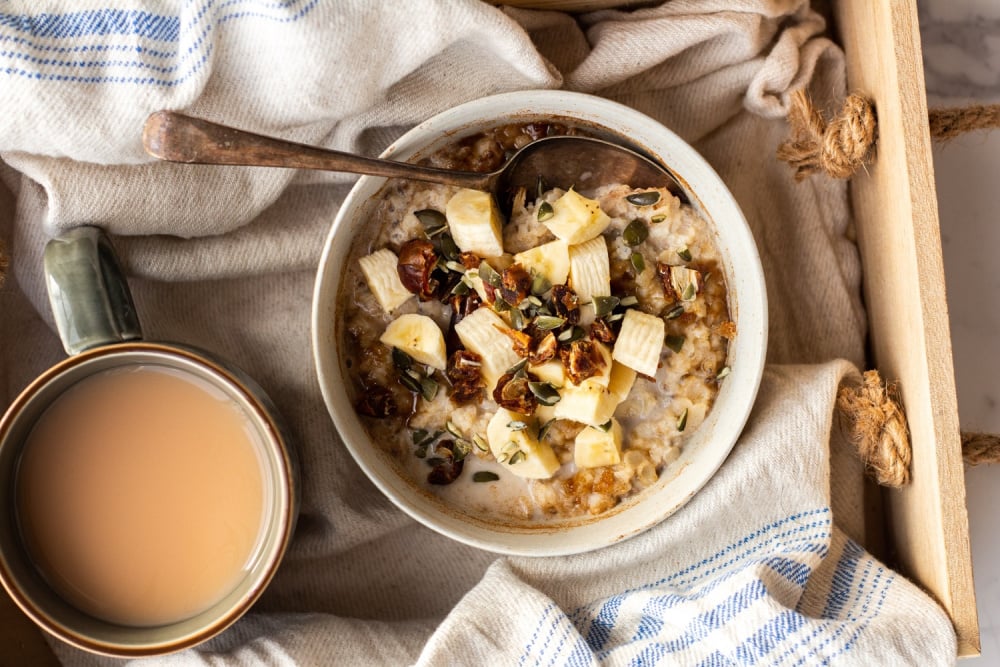
One of my favourites is creamy porridge topped with sliced banana (firm with no brown spots), pumpkin seeds and chia seeds, a couple of sliced dried dates and a sprinkle of brown sugar. Other easy options might include overnight oats, eggs on low FODMAP toast, lactose free yoghurt with kiwifruit or a handful of blueberries, or a low FODMAP smoothie.
Once you find a breakfast that works for you, there is absolutely nothing wrong with putting it on repeat.
2. Bulk Prep Your Lunches
Meal prep doesn’t have to mean spending your entire Sunday filling dozens of containers.
Instead, I like to make one dish that provides several lunches. A roast vegetable frittata is a great example. It can be made ahead, portioned and then enjoyed over the next couple of days.
Soups, savoury slices, salads and leftovers from dinner can also make easy low FODMAP lunches.
Even preparing just one component in advance can help. Cook a batch of rice, roast some vegetables or prepare a protein source so there is less work involved when lunchtime arrives.
3. Prep Smoothie Ingredients for the Freezer
Smoothies can be a quick way to add extra nutrition to your day without a lot of preparation.
To make them even easier, I portion my smoothie ingredients into individual servings and stash them in the freezer.
Then, when I want a smoothie, I can grab a portion, add my liquid and yoghurt, then blend.
Just remember that it’s easy to overdo the fruit when you combine multiple ingredients, so use low FODMAP serving sizes when building your smoothie. You can find some of our low FODMAP smoothie recipes here.
4. Give Family Favourites a Low FODMAP Twist
Starting the low FODMAP diet doesn’t mean abandoning all the meals you used to enjoy.
Instead, look at whether you can adapt them.
For example, I created a low FODMAP version of one of our favourite waffle breakfasts using gluten free waffles topped with lactose free yoghurt, lemon curd and blueberries.
Depending on the meal, adapting a favourite might be as simple as swapping onion and garlic for garlic-infused oil and herbs, choosing a low FODMAP sauce, using lactose free dairy, or adjusting a higher FODMAP ingredient.
Keeping familiar meals in your routine can make the diet feel much less restrictive.
5. Have a Few 10-Minute Meals Up Your Sleeve
Not every meal needs to be a recipe.
Some days you need food quickly, and having a few low-effort combinations can stop mealtimes becoming overwhelming.
One of my easy lunches is tuna salad with pre-cooked brown rice, cucumber, lettuce and a few tablespoons of sweet corn. It takes about 10 minutes to throw together and gives me a balanced meal without much preparation.
Think about creating a handful of combinations using a carbohydrate, protein and some colourful vegetables that you can pull together when time and energy are limited.
If you don’t know where to start, you’ll find plenty of quick low FODMAP options in our Recipe Club, including 10 Minute Fried Rice, 10 Minute Creamy Corn & Chicken Soup, 10 Minute Creamy Salmon Burger, 15 Minute Broccoli & Cheddar Soup, and 15 Minute Tomato Soup with Cheese Toastie.
6. Keep Ready-to-Eat Snacks in the Freezer
The freezer can be your best friend when you’re following the low FODMAP diet.
I like keeping homemade snacks in there, such as our Banana & Chocolate Chip Muffins. That means there is something ready to grab when hunger hits rather than having to work out what to make.
Depending on what you enjoy, you could freeze muffins, slices, bliss balls or other low FODMAP baking in individual portions.
You don’t need a freezer packed with options. Even one or two snacks ready to go can make life easier.
7. Learn How to Navigate Eating Out
Following the low FODMAP diet doesn’t mean you have to avoid restaurants completely.
Eating out can take a little more planning during the first phase, but simple meals and a few clear requests can make it easier.
For example, I’ve ordered pineapple fried rice and asked for it to be prepared without onion or garlic. Because I also have coeliac disease and a tree nut allergy, I need to make additional requests for my own dietary requirements.
Before eating out, check the menu and look for meals that only need one or two changes rather than trying to completely redesign a dish.
And remember, you don’t need to achieve a perfectly low FODMAP meal every time. The aim is to make the best choice you reasonably can while still enjoying your life.
8. Make One Family Meal Instead of Several
One of the easiest ways to make the low FODMAP diet more manageable is to avoid cooking completely separate meals for everyone whenever possible.
I often make a low FODMAP family dinner that we can all enjoy together. Other family members still eat high FODMAP foods at their other meals and snacks.
Meals like shepherd’s pie, tacos, pasta dishes, traybakes, curries and stir-fries can often be adapted so the base meal works for everyone.
This saves time and helps the low FODMAP diet feel like part of normal family life rather than a completely separate way of eating. If you need some inspiration, our Recipe Club has a ‘Family Favourites’ recipe filter with more than 450 delicious low FODMAP options.
9. Make Room for Foods You Enjoy
Food isn’t just fuel, and following the low FODMAP diet doesn’t mean every mouthful needs to be chosen for its nutritional credentials.
There is room for dessert too.
I enjoy treats like our Dark Chocolate & Raspberry Brownie with a low FODMAP serving of ice cream.
Giving yourself permission to enjoy food can also help move away from labelling foods as “good”, “bad”, “healthy” or “unhealthy”.
Instead, aim for an overall varied diet that includes nutritious foods alongside foods you simply enjoy.
You Don’t Need to Do the Low FODMAP Diet Perfectly
There is a lot to learn when you first start the low FODMAP diet, but it should get easier.
Find the meals that work for you. Repeat them. Use your freezer. Adapt family favourites. Keep a couple of ridiculously easy meals available for the days when cooking feels like too much work.
Most importantly, remember that the first phase of the low FODMAP diet isn’t intended to be a long-term diet. Once your symptoms have settled, the next step is to move through FODMAP reintroduction to discover which FODMAP groups and serving sizes you personally tolerate.
The goal isn’t to become exceptionally good at restricting FODMAPs. It’s to ultimately build a varied and flexible diet that works for you.
Need Help Making the Low FODMAP Diet Easier?
You don’t have to figure everything out on your own.
Our FODMAP Made Easy program gives you step-by-step guidance through each phase of the low FODMAP diet, including reintroduction and discovering your personal FODMAP tolerance. You’ll also get access to our full recipe collection, dietitian-led classes, practical resources and support to help take some of the stress out of navigating the diet.
If you’re mainly looking for meal inspiration, our Recipe Club gives you access to 1,200+ dietitian-reviewed low FODMAP recipes, with filters to help you quickly find meals that suit your needs.






Leave a Reply