When you have gut issues it can be really hard to figure out what factor is causing what symptoms. As you go through the low FODMAP diet process it’s really important that you understand what symptoms are likely linked to FODMAPs and which symptoms might be caused by something else entirely.
A lot of people assume every symptom is food-related, while others immediately blame the last thing they ate. Unfortunately, it is usually not quite that simple.
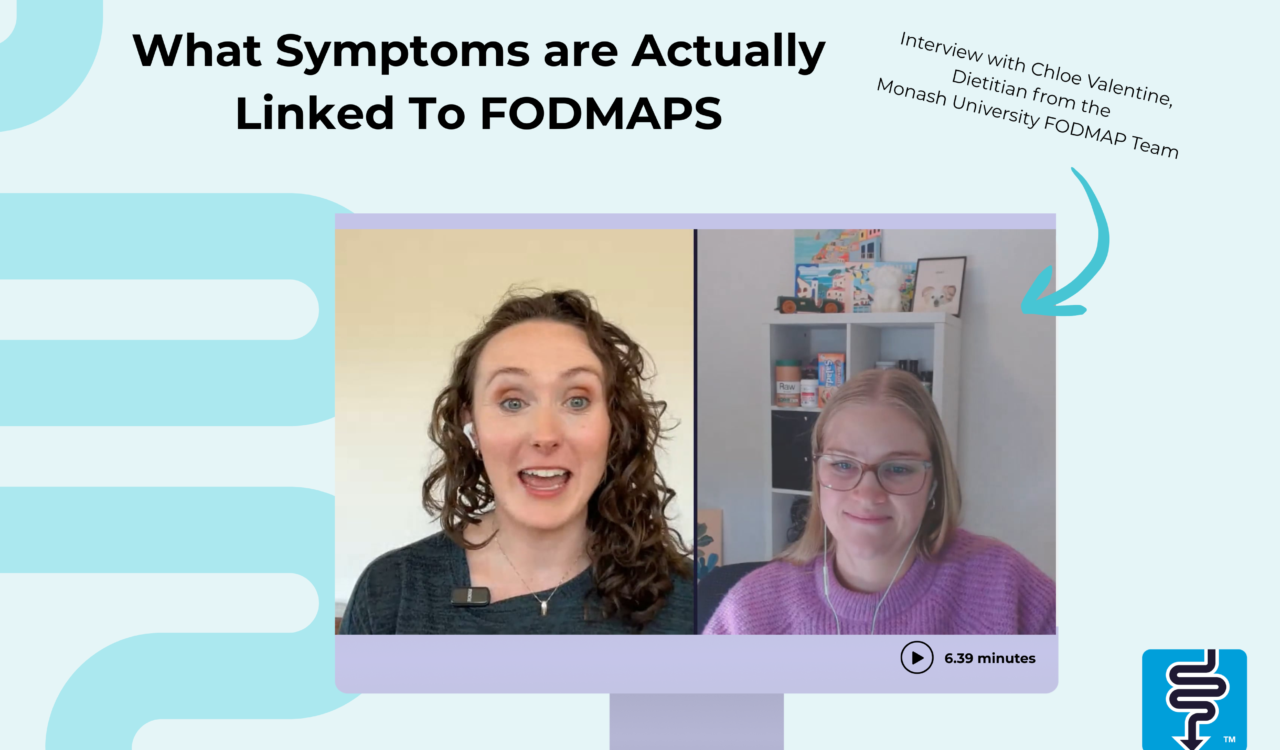
We recently sat down with research dietitian, Chloe Valentine from the Monash University FODMAP team to talk through the symptoms commonly linked to FODMAPs, what is happening in the gut during a reaction, and when it might be time to look beyond FODMAPs for answers.
What Symptoms Are Typically Linked To FODMAPs?
FODMAPs are most commonly linked to digestive symptoms and changes within the gut.
According to Chloe, the most common symptoms include:
- Abdominal pain
- Cramping
- Discomfort
- Bloating
- Distension (looking visibly bloated)
- Excess gas or wind
- Changes in bowel habits like urgency, diarrhoea, constipation or a mix of both
These are the symptoms most commonly associated with FODMAPs. Let’s look at how FODMAPs trigger gut symptoms.
What Is Actually Happening In The Gut When You Eat High FODMAP Foods?
FODMAPs are types of carbohydrates that are poorly absorbed in the small intestine. When these carbohydrates are not properly absorbed, a few things start happening in the digestive system.
Step 1: Water Is Drawn Into The Intestines
FODMAPs naturally pull water into the intestines because of their chemical structure. For some people, this extra water can contribute to symptoms like: loose stools, urgency and diarrhoea.
Step 2: Gut Bacteria Ferment The FODMAPs
The undigested FODMAPs then move into the large intestine where they become food for gut bacteria. As the bacteria ferment these carbohydrates, gas is produced. This combination of extra water, extra gas and the expansion of the intestines can contribute to symptoms like bloating, pain and constipation.
Step 3: The IBS Gut Responds More Strongly
One important thing Chloe highlighted is that people with Irritable Bowel Syndrome often have a more sensitive gut due to visceral hypersensitivity.
The nerves around the intestines react more intensely to stretching and pressure, meaning the bloating and expansion caused by FODMAPs can feel much more painful or uncomfortable. This is why two people can eat the same food, but one person experiences symptoms while the other does not.
Are There Symptoms That Are Not Usually Caused By FODMAPs?
Yes, there are a range of symptoms that can come from non-FODMAP causes. We need to remember that FODMAP reactions are generally linked to digestive or gut-related symptoms. If symptoms are occurring outside the digestive system, it may point toward something else going on.
Chloe mentioned that symptoms such as:
- Hives
- Skin reactions
- Itching
- A stuffy nose
are more commonly associated with allergic reactions rather than FODMAP intolerance.
This is because allergies involve the immune system, while FODMAP intolerance mainly affects digestion within the gut.
What Should You Do If Your Symptoms Don’t Fit The Typical FODMAP Pattern?
If your symptoms seem unusual, are affecting other parts of your body, or do not improve as expected, it is important to seek further medical advice.
Chloe recommends speaking with:
- Your GP
- Gastroenterologist
- Dietitian
- Or possibly an allergist depending on your symptoms
This is important because conditions such as:
- Coeliac disease
- Food allergies
- Inflammatory bowel disease (IBD)
can sometimes cause symptoms that overlap with IBS but require very different treatment and management. If you are already working with a dietitian, they can also help guide you toward the right investigations or communicate concerns back to your healthcare team.
Is It Always The Last Meal That Triggered Your Symptoms?
Not necessarily. This is one of the biggest misconceptions people have when managing IBS symptoms.
A lot of people experience symptoms after eating and immediately assume the most recent meal was the problem. However, Chloe explained that FODMAP reactions often take time to develop because symptoms occur when the FODMAPs move further into the digestive system and reach the small and large intestines. This process can take hours.
So Why Do Symptoms Sometimes Happen Right After Eating?
This is partly linked to something called the gastrocolic reflex. When you eat, your digestive system responds by pushing food further along the digestive tract to make room for the new meal coming in.
That means:
- The meal you just ate may not be the real trigger
- A higher FODMAP food or meal eaten earlier in the day may have moved further through your digestive system
- Symptoms can then appear during or after your next meal
For example, if you ate a higher FODMAP breakfast, you might not experience bloating or additional symptoms until later at dinner time.
This is one reason why food and symptom diaries can be helpful during the low FODMAP diet. They allow you to look at patterns across the entire day rather than focusing only on the most recent meal.
Please note that you don’t have to keep a strict food and symptom. This can be a strategy to come back to if you find the low FODMAP diet isn’t helping reduce symptoms after a couple of weeks.
Final Thoughts
FODMAPs are most commonly linked to digestive symptoms such as bloating, abdominal pain, gas, diarrhoea, constipation, and changes in bowel habits. These symptoms occur because FODMAPs draw water into the intestines and are fermented by gut bacteria, leading to gas production and stretching of the gut.
Not every symptom is caused by FODMAPs. Symptoms outside the digestive system may suggest allergies or other medical conditions that should be properly investigated.
And finally, remember that the last meal you ate is not always the true cause of your symptoms. Reactions can sometimes be linked to foods eaten earlier in the day (or even the previous day) as they move through the digestive system.
Taking a step back, looking for patterns, and working with qualified healthcare professionals can make the low FODMAP journey feel much clearer and less overwhelming. If you need more FODMAP support please check out the Monash University FODMAP Diet App or the FODMAP Made Easy program.









Leave a Reply