There is a big myth in the IBS world that you need to be completely symptom-free before starting the reintroduction phase of the low FODMAP diet. This is simply not true. In fact, waiting for “perfect” symptoms is one of the main reasons people get stuck in the restrictive first phase of the low FODMAP diet for far too long.
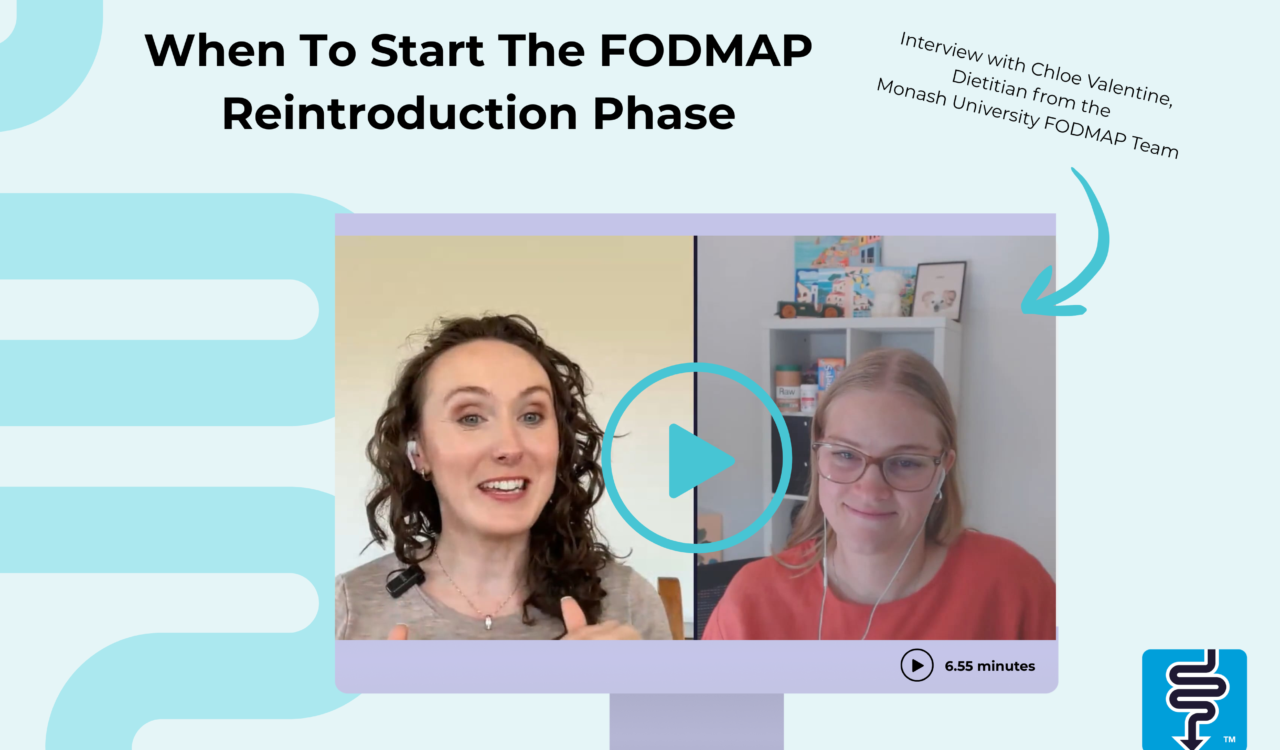
We recently sat down with research dietitian, Chloe Valentine from the Monash University FODMAP Team to talk about what realistic symptom improvement actually looks like, why symptoms can still fluctuate during the diet, and how to know when it is time to start reintroducing foods again.
What Is A Realistic Symptom Response During The First Phase?
The goal of the first phase of the low FODMAP diet is symptom improvement, not complete symptom resolution.
For most people living with Irritable Bowel Syndrome (IBS), some symptoms will still happen from time to time, even when following the diet really well.
The aim of the first phase is usually to reach a point where symptoms:
- Feel more manageable
- Cause less pain or discomfort
- Have less impact on daily life
- Create less stress or anxiety around leaving the house
- Feel less consuming overall
For example, you may still occasionally experience bloating or gas, but the symptoms might feel milder and less disruptive, or you may feel more confident going out without constantly worrying about where the nearest toilet is.
That kind of improvement is often considered a successful response to the first phase.
Is It Normal For Symptoms To Fluctuate During The First Phase?
Yes, absolutely. Even when someone is following the low FODMAP diet correctly, symptoms can still vary from day to day. This is because IBS symptoms are influenced by far more than just FODMAP intake.
What Other Factors Can Influence IBS Symptoms?
Chloe highlighted several other factors that can significantly affect symptoms outside of FODMAPs.
Stress And Mental Health
There is a strong connection between the gut and the brain, often referred to as the gut-brain axis. Stress, anxiety, overwhelm, and other mental health factors can all increase gut sensitivity and make IBS symptoms feel worse.
Sometimes people become so stressed about “doing the diet perfectly” that the stress itself can worsen symptoms.
This is why support from healthcare professionals can be so valuable during the process.
Hormones And The Menstrual Cycle
Hormonal changes can also influence IBS symptoms, particularly for women.
Chloe explained that symptoms may fluctuate:
- Around the menstrual cycle
- During perimenopause
- During menopause
For example, someone may feel like their symptoms are improving overall, only to suddenly experience a flare-up around their period.
That does not necessarily mean the low FODMAP diet is not working.
At What Point Should You Start Reintroductions?
This is where many people get stuck and there is a really simple guideline that can help. If your symptoms have improved enough that you are generally feeling better and your quality of life has improved, it is probably time to move into reintroductions. You do not need to wait until every symptom disappears.
These scenarios can help you identify where you are at:
Scenario 1: Symptoms Have Clearly Improved
“I’ve been on the low FODMAP diet for a few weeks. I used to have symptoms every day, but now most of the time I feel pretty good. I can go about my normal activities and I’m not thinking about my gut constantly.”
This is exactly the type of improvement we are looking for before starting reintroductions.
Scenario 2: Not Sure If The Diet Has Helped
This situation is actually very common too. Sometimes people reach a point where they honestly cannot tell whether the low FODMAP diet is making a difference.
In this case, Chloe suggested something surprisingly simple:
Try returning to your regular diet for a short period and compare your symptoms. If your symptoms suddenly get much worse than this is an indicator that the low FODMAP diet was helping more than you realised. In that case, you could:
- Return to the low FODMAP diet
- Regain symptom improvement
- Then begin reintroductions
If symptoms stay the same regardless of whether you are following the low FODMAP diet, it may suggest that FODMAPs are not the main driver of symptoms.
This is the point where working with your healthcare team becomes especially important to identify other strategies for managing symptoms.
Scenario 3: Moderate symptoms or fluctuating symptoms
A lot of people fall somewhere in the between scenario 1 and scenario 2. Maybe symptoms have improved a little, but not dramatically. Or perhaps things feel inconsistent and confusing.
In these situations, Chloe and Alana recommended:
- Going back and troubleshooting the diet
- Checking for sneaky high FODMAP ingredients
- Reviewing serving sizes in the Monash University FODMAP Diet App
- Looking at stress, hormones, and lifestyle factors
- Giving it another week or two if needed
If symptoms still remain unclear after that, it may still be worth starting reintroductions.
As Chloe explained, the reintroduction phase itself often provides valuable information. Sometimes you do not fully understand your symptom patterns until you begin testing different FODMAP groups.
Extra Reintroduction Resources
These extra reintroduction resources can help get you started:
Interview on Overcoming Reintroduction Fear
‘Reintroduction tools’ in the ‘Diary’ area of the Monash University FODMAP Diet App
Guided reintroduction program with additional dietitian email support in the FODMAP Made Easy Program.
Final Thoughts
You do not need to be symptom-free before starting the reintroduction phase of the low FODMAP diet. The goal of the first phase is realistic symptom improvement and a better quality of life, not perfection.
This means if you symptoms are less intense and more manageable, then it is often time to move forward and begin testing your FODMAP tolerances. The reintroduction phase is where you begin learning more about your body and moving toward a more varied and sustainable way of eating.








Leave a Reply