If you’ve recently opened the Monash University FODMAP Diet App and noticed changes to some sugar serving sizes, you might be wondering whether sugar is still allowed on the low FODMAP diet.
We want to reassure you that the low FODMAP diet is not sugar free.
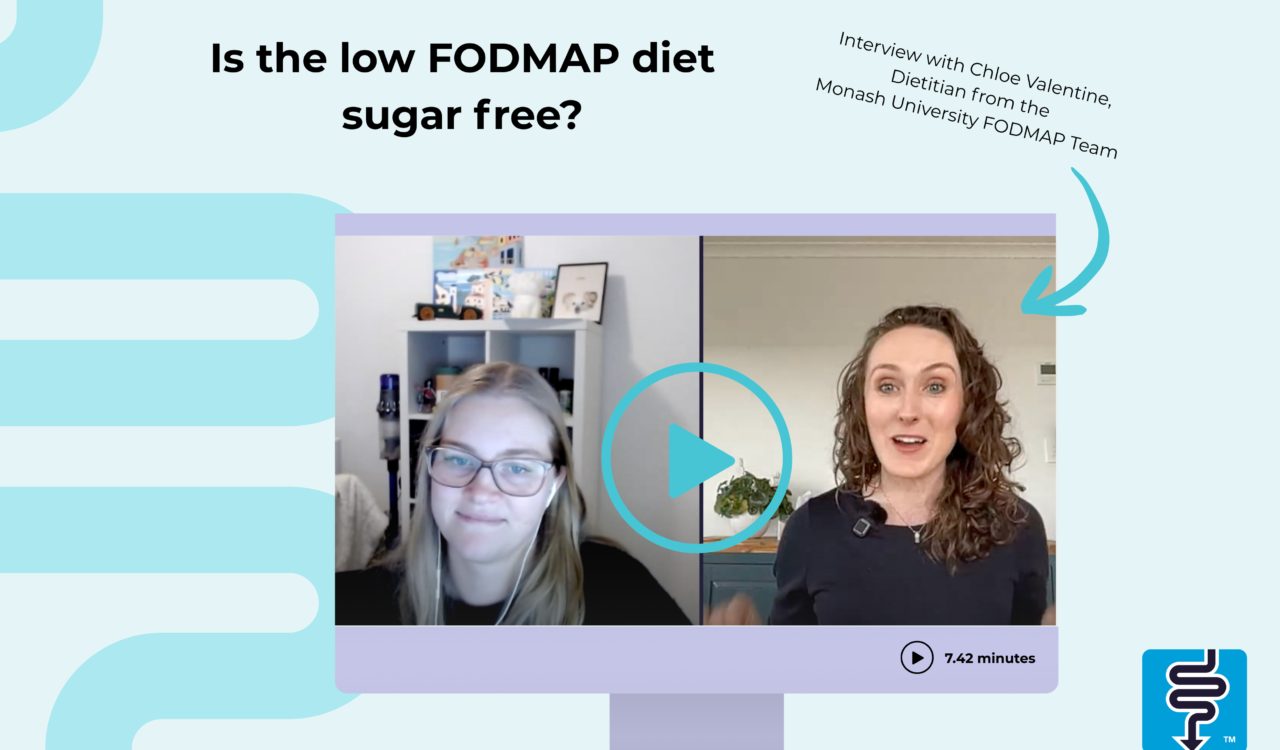
In a recent interview with Chloe Valentine, a Research Dietitian from the Monash University FODMAP Team, we discussed the role of sugar on the low FODMAP diet, how to interpret the Monash App listings, and whether you can still enjoy homemade baking and sweet treats while following the diet.
Is the Low FODMAP Diet Sugar Free?
No. The low FODMAP diet is not sugar free.
According to Chloe Valentine, there can be some confusion around the word “sugar” because FODMAPs are carbohydrates and may be referred to as sugars in scientific settings. However, when most people think about sugar, they are thinking about the sweet crystals added to food and drinks.
These sugars are not automatically off-limits on the low FODMAP diet. This means you can still enjoy a teaspoon of sugar in your coffee, use sugar in your homemade baking, and include sweet treats while following the low FODMAP diet.
Which Sugars and Sweeteners Are Low FODMAP?
Many of the most commonly used sugars are very low FODMAP and can be enjoyed during the first phase of the low FODMAP diet.
Examples include:
- White sugar
- Brown sugar
- Raw sugar
- Icing sugar (powdered sugar)
- Palm sugar
These sugars remain low FODMAP in very large servings up to 500 grams according to the Monash University FODMAP Diet App, so there is no need to restrict your serving size based on FODMAP content.
Some sugars, such as coconut sugar, demerara sugar, and rock sugar, do have moderate or high FODMAP serving sizes, so it’s important to check the Monash University FODMAP Diet App for the most up-to-date information.
When in doubt, use the app to check the specific sugar or sweetener you plan to use.
Understanding the Monash University FODMAP Diet App
One area that causes a lot of confusion is how to interpret the serving sizes shown in the Monash App.
For example, white sugar may display a green serving size of 1 teaspoon (5 g).
Many people see this and immediately worry that they can only consume one teaspoon of sugar. Fortunately, that isn’t what the app is telling us.
Why Does Sugar Show a 1 Teaspoon Serving?
Chloe explained that the standard serving size for sugar is set at one teaspoon because that is the serving size commonly listed on sugar packaging.
Using a standard serving size allows Monash University consistently display sugars within the app and make them easier for you to compare.
The one teaspoon serving is not intended to be a maximum serving size.
Tap Into the Listing for More Information
When you tap on a food in the Monash University FODMAP Diet App, you’ll often find additional information in the statements section.
For sugars such as white sugar, brown sugar, and icing sugar, you’ll see a note explaining that the food remains low FODMAP in servings up to 500g.
This is because these sugars contain negligible amounts of FODMAPs.
Monash applies a consistent approach to foods that are extremely low in FODMAPs. Rather than claiming they contain no FODMAPs at all, they provide a practical threshold that is far beyond what people would typically consume in one sitting.
The key takeaway is simple: Don’t stop at the traffic light. Tap into the food listing and read the additional information provided. Often you’ll find you can increase your serving of the food.
Can You Still Enjoy Homemade Baking and Sweet Treats?
Absolutely.
Chloe’s advice was simple:
“Bake to your heart’s content with these sugars that have the green traffic light.”
The low FODMAP diet can already feel restrictive, especially during the first phase. Removing enjoyable foods unnecessarily can make the diet harder to follow and less sustainable.
A balanced diet includes both nutritious foods and foods that bring enjoyment.
That means there is still room for:
- Brownies
- Muffins
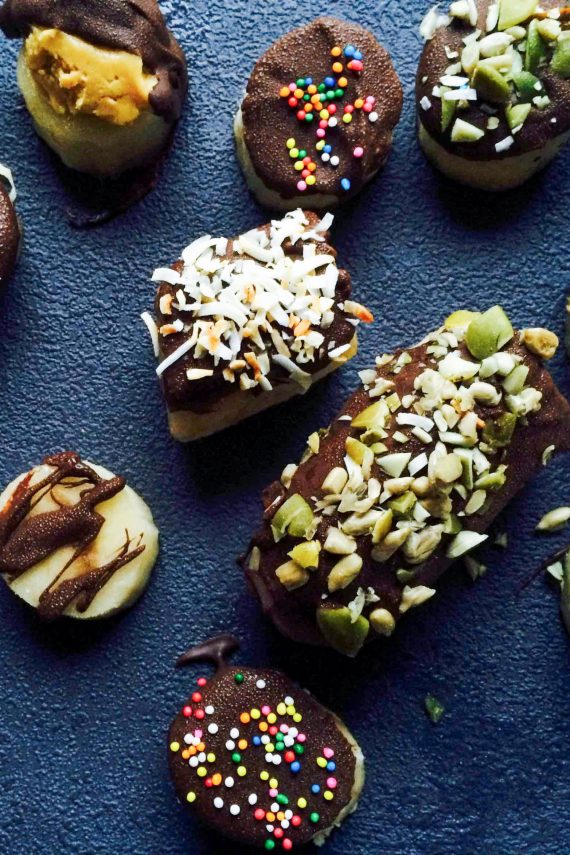
- Bliss balls
- Pancakes
- Waffles
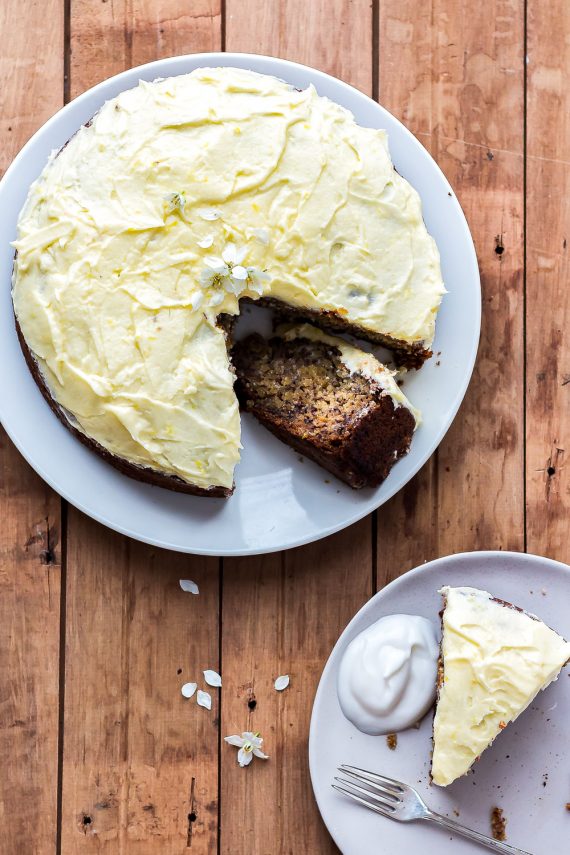
- Birthday cakes
- Celebration desserts
The key is choosing low FODMAP recipes and paying attention to serving sizes. You can find low FODMAP recipes on monashfodmap.com or in our free recipe area. If you are struggling to find food you enjoy on the low FODMAP diet, then check out the 1300 recipes we have in our low FODMAP Recipe Club.
Remember, when a recipe contains sugar, that sugar is usually divided across multiple servings. For example, a cake might contain a cup or two of sugar, but once divided into 12 or 16 slices, the amount consumed per serve is much smaller.
What About Maple Syrup?
Maple syrup remains a popular sweetener on the low FODMAP diet.
When using maple syrup, it’s important to check the Monash University FODMAP Diet App for the current serving guidance and pay attention to the amount you personally consume. The rule of thumb here is to keep your serving size at 1 tablespoon or less.
Final Thoughts
If you’ve been worried that the low FODMAP diet is becoming sugar free, here are the key takeaways:
- The low FODMAP diet is not sugar free.
- White sugar, brown sugar, palm sugar and icing sugar remain low FODMAP in very large serves and don’t need to be restricted.
- The green serving size shown in the Monash University FODMAP Diet App is often a standard serving size, not necessarily the maximum amount you can consume.
- Tap into food listings to read the additional statements and serving information.
- You can continue to enjoy homemade baking and sweet treats while following the low FODMAP diet.
- Focus on overall serving sizes and recipe portions rather than panicking about individual ingredients.
If you’re feeling confused about the low FODMAP diet, remember that the Monash University FODMAP Diet App is your most reliable source of food information and serving guidance. We can also provide lots of additional support through the FODMAP Made Easy program.
And most importantly, don’t let unnecessary food fears stop you from enjoying your meals.






Leave a Reply