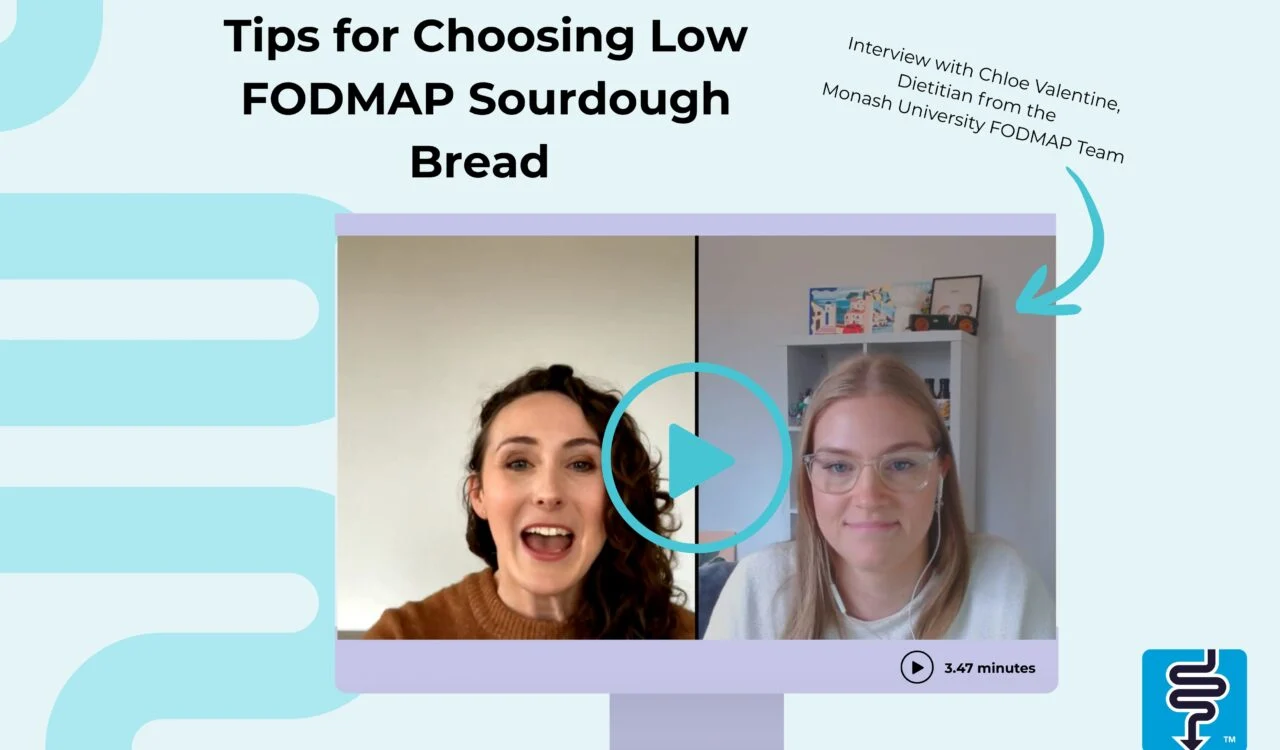
Many people with IBS assume that wheat bread is completely off limits during the low FODMAP diet. However, that’s not always the case. Traditional sourdough bread can actually be a low FODMAP option and a delicious one too. To help explain why, we spoke with Chloe Valentine, a research dietitian from the Monash University FODMAP team, to uncover the science behind sourdough.
The Science: Why Are Some Sourdough Breads Low FODMAP?
Traditional sourdough bread is made from a few simple ingredients: flour, water, salt, and a sourdough starter. The starter contains naturally occurring bacteria and yeast that ferment the dough, helping it rise and develop its distinctive flavour and texture.
While the bread proves (rises before baking), the bacteria and yeast in the starter break down (ferment) some of the carbohydrates in the flour. Since FODMAPs are types of carbohydrates, this fermentation process can reduce the overall FODMAP content of the bread.
One of the key FODMAPs in wheat and rye flour is fructans. The fermentation process of the sourdough bread helps break down the fructans, making the baked bread easier for many people with IBS to tolerate without symptoms.
The Importance of Flour Type
Not all sourdough bread is created equal. Monash University’s lab testing has shown that wheat or spelt sourdough breads generally have lower FODMAP levels compared to standard wheat or spelt breads (made without fermentation). This means that if you are shopping for sourdough, choosing a wheat or spelt sourdough loaf is often a good place to start.
Sourdough breads made from other flours like rye, kamut or oat can have higher FODMAP levels and should be limited or avoided during the first phase of the low FODMAP diet.
What About Yeast In Sourdough Bread?
A common question people ask is whether sourdough that includes added yeast is still suitable. Chloe explains that one of the most important factors in reducing the FODMAP content is the length of fermentation, also known as proving time. When commercial yeast is added, it can shorten the fermentation process.
Monash University has not yet studied whether adding yeast impacts the FODMAP content of sourdough. If your wheat or spelt sourdough loaf contains yeast, Chloe recommends trying it and seeing how your body responds.
Ingredients To Watch Out For
When buying sourdough bread, check the ingredient list carefully. Some loaves may contain added high FODMAP ingredients.
Chloe recommends avoiding breads that include:
- Rye flour, which tends to remain high FODMAP even after fermentation
- Soy flour, another concentrated source of FODMAPs
- Added prebiotics such as inulin or apple fiber
- Dried fruits, which can increase the FODMAP content
Keeping an eye out for these ingredients can help you choose a sourdough bread that is easier on your gut.
How Much Can You Enjoy?
If you are in the first phase of the low FODMAP diet and have found a suitable sourdough bread made from wheat or spelt, you can enjoy two slices per meal while staying within low FODMAP recommendations. That’s enough for a hearty sandwich or a couple of slices of loaded toast.
Final Thoughts
Sourdough bread doesn’t need to be off the menu if you have IBS. The fermentation process naturally lowers the FODMAP content, making wheat or spelt sourdough a great way to enjoy bread without triggering symptoms.
For more details on which foods are low or high in FODMAPs, check out the Monash University FODMAP Diet App, or explore practical articles and recipes on A Little Bit Yummy.









Thank you for information explaining what to look for when buying sourdough bread.
You are very welcome. We hope it helps.