If you’ve been told you’re lactose intolerant, it’s very easy to assume that all dairy needs to come off your plate. For many people, that’s where the stress starts as suddenly food feels more restrictive and harder to enjoy. Avoiding all dairy “just in case” can sometimes lead to unnecessary restriction and make it harder to meet key nutrient needs, such as calcium and protein.
The reassuring part is that lactose intolerance doesn’t automatically mean you need to be dairy free. For most people, there are still plenty of dairy options that can fit comfortably into their diet, including on the low FODMAP diet.
Let’s break it down in a simple and practical way.
What lactose intolerance actually means
Lactose is the natural sugar found in milk and some dairy products. Your body needs and enzyme called lactase to digest lactose.
If you’re lactose intolerant it means your body doesn’t produce enough lactase to fully break down lactose. When lactose isn’t digested properly, it can move into the large intestine where it is fermented by your gut bacteria and can cause symptoms such as bloating, gas, abdominal pain or diarrhoea.
An important thing to understand is this:
Lactose intolerance is dose-dependent.
That means it’s not usually an all-or-nothing situation. Many people can tolerate small amounts of lactose, or certain types of dairy, without triggering symptoms.
Why dairy isn’t automatically off the table
One of the biggest misconceptions we see is that lactose intolerance = no dairy at all. In reality, there are several reasons why many people with lactose intolerance can still include dairy foods.
Lactose free dairy is widely available
Products labelled as ‘lactose free’ milk, yoghurt, or cream have lactase enzymes added to them which break the lactose into simpler sugars. This makes them much easier to digest, while still providing the same nutrients as regular dairy.
Some dairy is naturally low in lactose
Not all dairy contains the same amount of lactose. For example:
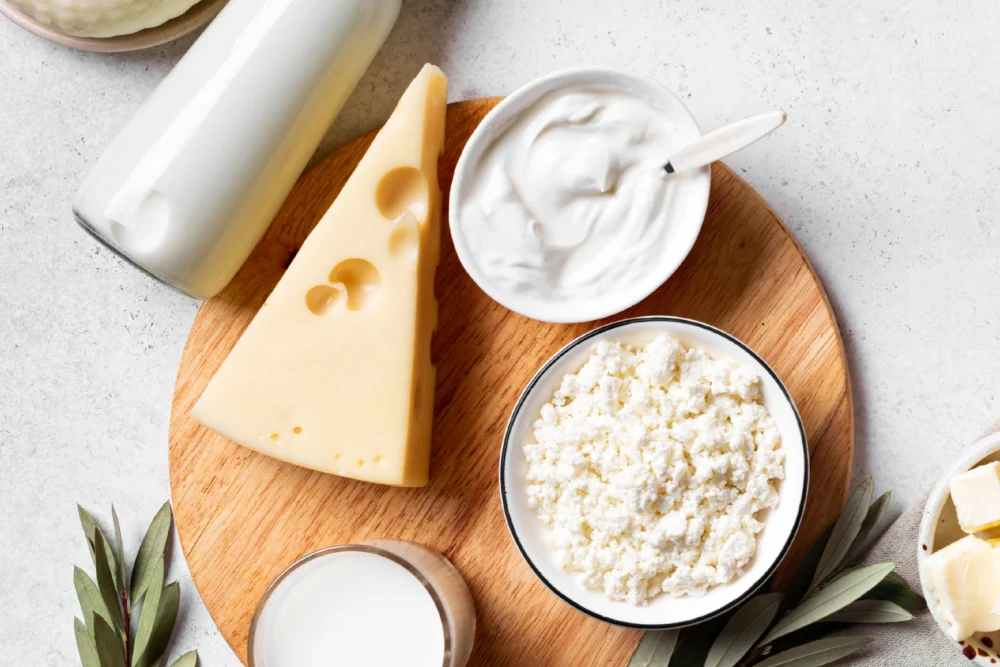
- Hard cheeses (such as cheddar, edam, colby, havarti, pecorino, manchego, Monterey Jack, parmesan, and Swiss) are naturally lactose free or very very low in lactose.
- Mozzarella, Oaxaca, feta, camembert, and brie are also very low in lactose.
- Butter contains only trace amounts of lactose.
- Cream cheese, cottage cheese and sour cream are low lactose in 2 tablespoon servings.
- Regular cream is low FODMAP in 2 tablespoon servings or ½ cup servings when whipped
- Yoghurt and ice cream both have small low lactose servings but as the serving size increases they quickly contain moderate to high levels of lactose.
- If lactase enzymes are added to the product then it is considered ‘lactose free’.
You can find accurate information on the lactose levels of food in the Monash University FODMAP Diet App or in our FODMAP food lists in the FODMAP Made Easy program.
Portion size matters
Many people with lactose intolerance can tolerate small low lactose serves of regular dairy without issues, especially when eaten with other foods. This is why blanket rules about cutting out all dairy usually aren’t necessary and can make the diet feel harder than it needs to be.
How lactose fits into the low FODMAP diet
Lactose is one of the FODMAPs (it falls under D for disaccharide) but it’s only one part of the picture.
On the low FODMAP diet the goal isn’t to remove entire food groups forever. It’s to:
- Reduce high FODMAP food and serving sizes during the initial phase
- Identify your personal tolerance
- Reintroduce foods where possible
This means that for many people following a low FODMAP approach:
- Lactose free dairy is encouraged
- Naturally low lactose dairy can be included
- Going completely dairy free isn’t required unless symptoms clearly point that way
Avoiding all dairy “just in case” can sometimes lead to unnecessary restriction and make it harder to meet key nutrient needs, such as calcium and protein. If you think you are reacting to low lactose dairy products then it’s time to talk to your doctor or a FODMAP trained dietitian about other potential issues like a milk protein allergy.

Ready to feel confident about your food choices?
Inside FODMAP Made Easy, we guide you step-by-step so you don’t have to over-restrict or second-guess what’s on your plate.
No thanks, I’ll keep reading.
The dairy products we use in A Little Bit Yummy recipes
At A Little Bit Yummy, we don’t automatically exclude dairy from our low FODMAP recipes. Instead, we choose dairy products and serving sizes that are compatible with lactose intolerance and suitable for the low FODMAP diet.
Here are the main dairy ingredients you’ll see used across our recipes:
- Butter
Butter is naturally very low in lactose and is generally well tolerated in typical cooking serves. - Lactose free milk
We regularly use lactose free milk, which has had the lactose broken down using the enzyme lactase, making it much easier to digest for people with lactose intolerance. - Cream (in small, tested serves)
Yes, cream does contain lactose, but in small portions it can still be suitable on the low FODMAP diet. We only use cream in amounts that align with low lactose serving sizes. - Cheeses such as colby, cheddar, mozzarella and feta
Many hard and semi-hard cheeses are naturally lower in lactose due to the cheese-making and ageing process. These cheeses are commonly included in our recipes in portions that are suitable for lactose intolerance. - Lactose free yoghurt
Lactose free yoghurt allows you to enjoy the taste and texture of yoghurt without the digestive discomfort, and it’s a staple in many of our breakfast, snack, and sauce recipes.
All of our recipes are created using low FODMAP guidelines and reviewed by FODMAP-trained dietitians, so serving sizes and ingredients are chosen carefully to minimize gut symptoms. This approach allows us to keep meals enjoyable and realistic without unnecessary restriction.
Final Thoughts
Lactose intolerance doesn’t automatically mean you need to be dairy free.
For many people, choosing lactose-free options, understanding portion sizes, and selecting naturally low lactose dairy can make a big difference to their gut symptoms without unnecessary restriction.
If you’re feeling unsure about which dairy products are likely to work for you, this is exactly the kind of guidance we provide inside FODMAP Made Easy. You don’t have to guess, cut everything out, or navigate it alone.
Image credit: Oksana Mizina/Shutterstock.com








Leave a Reply