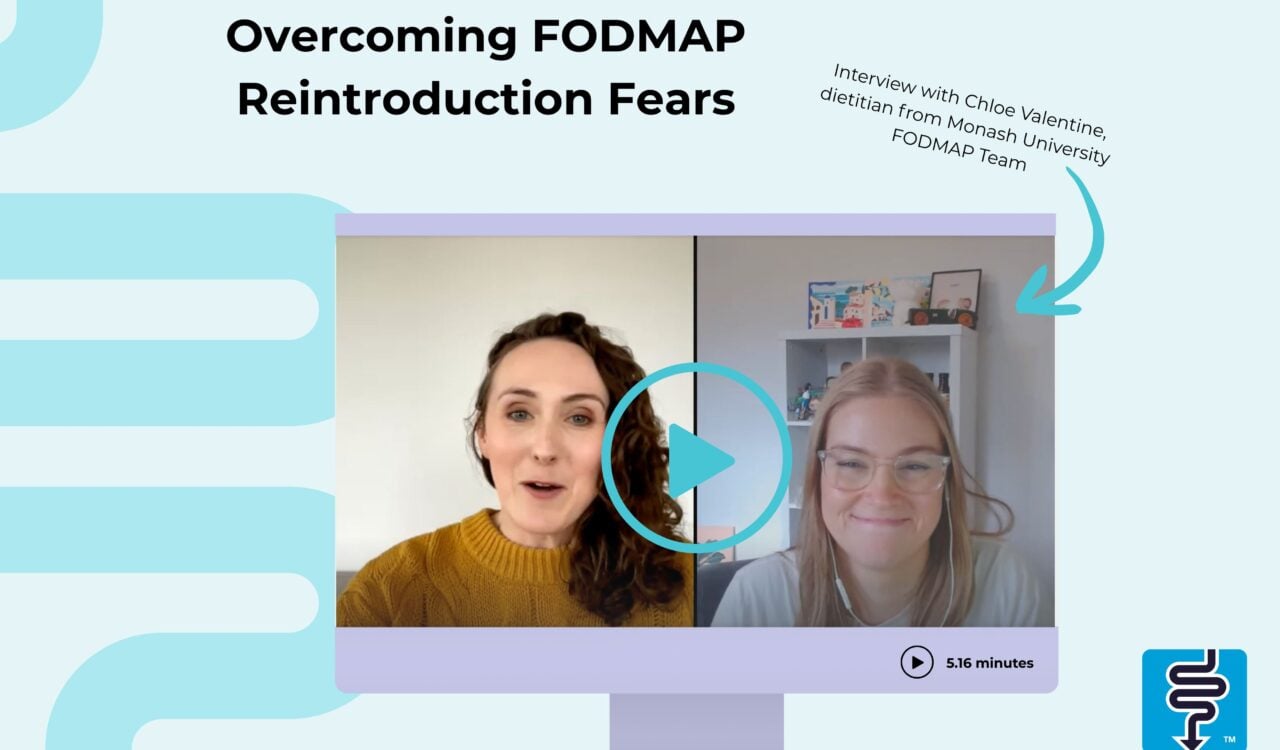
Food fear is real and for many people with IBS, the thought of reintroducing FODMAPs can be one of the most intimidating parts of their FODMAP journey. After working so hard to calm your gut and get your symptoms under control, it is completely normal to worry that adding foods back might make everything flare up again.
But here is the thing, reintroducing FODMAPs is not about losing control. It is about taking back your food freedom and learning exactly which foods work for your body. To help you feel more confident, we asked Chloe Valentine, a research dietitian from the Monash University FODMAP team, to share her insights and practical advice on reintroducing FODMAPs.
Why Reintroduction Feels So Scary
When people successfully settle their symptoms during step one of the low FODMAP diet, it can be hard to take that next leap. If you have had a bad reaction before or accidentally eaten a high FODMAP food that caused symptoms, it is easy to associate reintroduction with discomfort and fear.
There is also the confusion that comes with trying to figure out where to start, which foods to test and how much to eat. Many people worry they will undo all their progress or get stuck feeling unwell again. These fears are completely understandable but they do not have to hold you back
Why Reintroducing FODMAPs Matters
Step two, the reintroduction phase, is absolutely essential. The first stage of the diet is designed to be short-term because it is restrictive. If you stay on the full low FODMAP diet for too long, you might start missing out on key nutrients like calcium, iron and fibre, which support gut health and overall wellbeing.
The reintroduction phase helps you identify which FODMAP groups your body tolerates, allowing you to reintroduce those foods into your meals while keeping your symptoms settled. It also adds variety and enjoyment to your diet. When you know your specific triggers, it becomes much easier to eat out, cook for family and enjoy social occasions again. Instead of saying “I can’t eat that,” you will be able to say “I just need to skip the onion and mango in that dish.” That knowledge builds confidence and gives you the freedom to live and eat with less stress.
Strategies To Get Started
If you are feeling nervous about reintroducing FODMAPs, there are ways to make the process smoother and more positive.
1. Work with a FODMAP-trained dietitian
A FODMAP-trained dietitian can personalise the process for you, help you choose where to start and provide support if symptoms appear. Having expert guidance can make the process feel less overwhelming and more structured.
2. Use trusted tools
The Monash University FODMAP Diet App includes a reintroduction feature in the diary section. It walks you through each FODMAP category and provides examples of foods to test along with suggested amounts for each of the three reintroduction days. Tools like this take the guesswork out of the process.
You can also find supportive information and recipes on trusted websites like alittlebityummy.com, which are created to make reintroduction easier and more enjoyable. The A Little Bit Yummy team can guide you through the reintroduction process in the FODMAP Made Easy program and have FODMAP-trained dietitians available to answer your questions via email.
3. Start small
Begin with a food you miss the most or one you feel confident you will tolerate. Starting with a win helps build momentum and confidence for the next test.
4. Make it tasty.
Try incorporating the reintroduction test food into meals you already enjoy and tolerate well. For example, if you are testing onion, add the onion to your low FODMAP spaghetti bolognese. That way the meal will be tasty and familiar, helping reduce the fear factor from the FODMAP reintroduction.
What To Do If You React
If you react during a FODMAP reintroduction challenge, remember that this is completely normal. Most people on the low FODMAP diet react to at least one FODMAP group because that is why they are following the diet in the first place.
If symptoms appear, stop testing that food. You do not have to complete all three days of the challenge. Simply return to your usual low FODMAP meals and give your gut time to settle. Once symptoms fade, you can move on to testing a different FODMAP group when you feel ready.
It is also important to know that tolerance can change over time. Just because you react to a food now that does not mean you will always react to it. Many people find that when they repeat a FODMAP reintroduction in the future, they can tolerate foods that once caused symptoms. This is why reintroduction is not a one time event but an ongoing one.
Final Thoughts
The FODMAP reintroduction phase can feel like a big step, but you do not have to do it alone. Working with a FODMAP-trained dietitian or using structured tools in the Monash University FODMAP Diet App or on A Little Bit Yummy can give you the reassurance and confidence you need to keep moving forward.
Remember, the goal is not to avoid all high FODMAP foods forever. It is to understand your unique tolerances so you can enjoy a diverse and satisfying diet without unnecessary restrictions. Each food you successfully reintroduce is a win for both your gut and your overall health.







Leave a Reply